Operating Systems
Skill Programs
/
CSE -IT Programs
Operating Systems
Build, manage, and optimize the core software that powers modern computing with our comprehensive Operating Systems program.
Gain deep insight into how computers manage resources — from CPU scheduling and memory allocation to file systems and process synchronization. Learn how modern OS platforms like Linux, Windows, and Android operate under the hood, preparing you for careers in systems development, cybersecurity, embedded systems, and DevOps. Through practical simulations, kernel-level experiments, and real-world problem-solving, you’ll develop both theoretical mastery and hands-on technical fluency.
Technologies You’ll Learn



Our Approach
At our EdTech-powered digital learning hub, we emphasize a hands-on, system-level, and analytical approach to mastering Operating Systems. Each learner gains practical experience working with real OS environments, simulators, and tools used by industry professionals.
System Fundamentals & Architecture
Understand OS purpose, structure, and services.
Explore kernel architecture, user-space interaction, and system calls.
Study the role of operating systems in modern computing (PCs, servers, and embedded devices).
Process & Thread Management
Learn process creation, scheduling, and inter-process communication (IPC).
Implement CPU scheduling algorithms (FCFS, SJF, Priority, Round Robin).
Explore synchronization, concurrency, and deadlock management.
Memory & Storage Systems
Master memory allocation, paging, segmentation, and virtual memory.
Simulate page replacement algorithms (FIFO, LRU, Optimal).
Understand file systems, storage organization, and disk scheduling algorithms.
Security, Protection & Virtualization
Learn access control, authentication, and system protection models.
Understand modern OS security challenges and patching mechanisms.
Dive into virtualization and containerization concepts using VirtualBox, VMware, and Docker.
All Programs
Join the Program




Certifications
Professional achievements and credentials
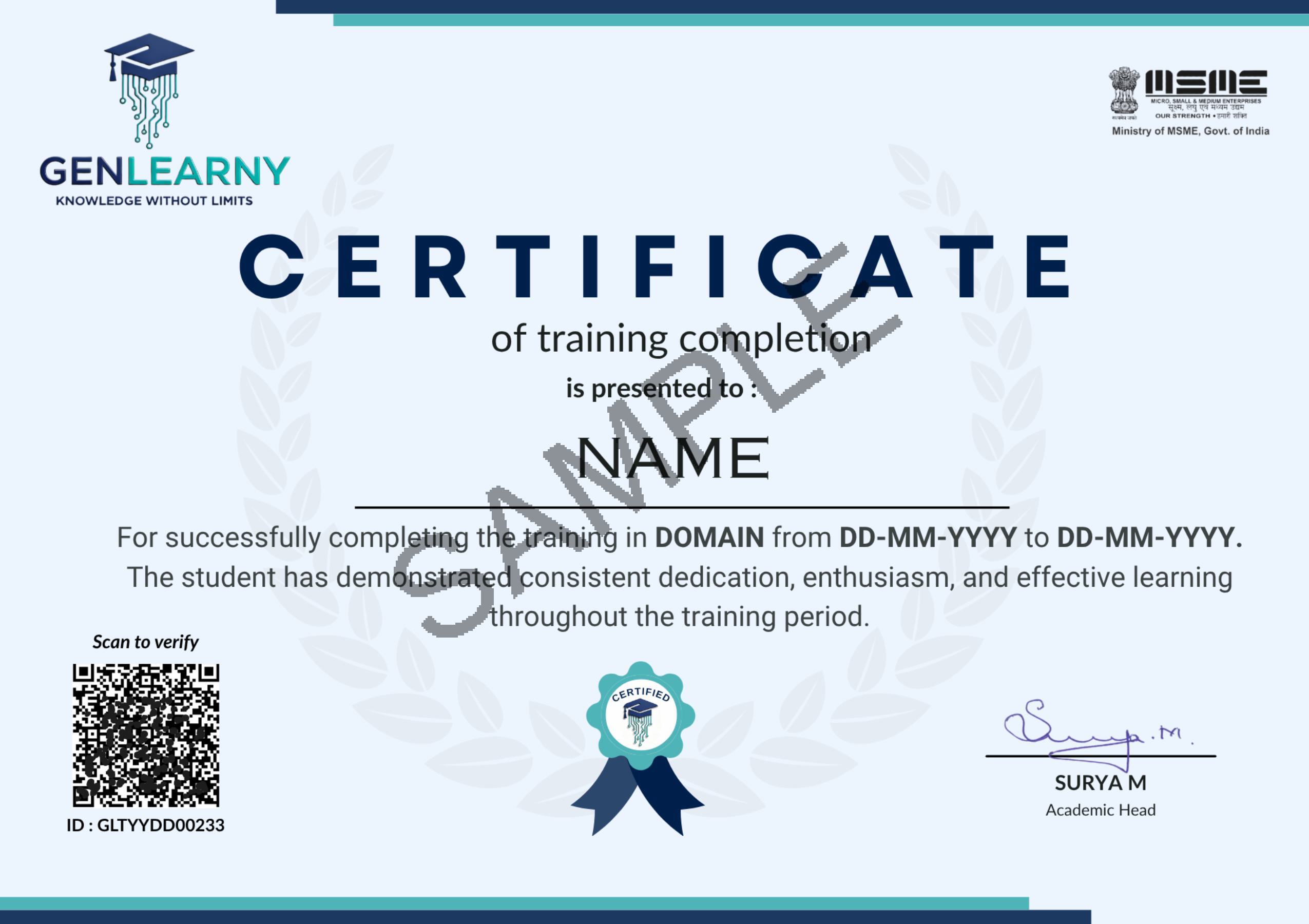
Training Completion Certificate
Issued by GenLearny
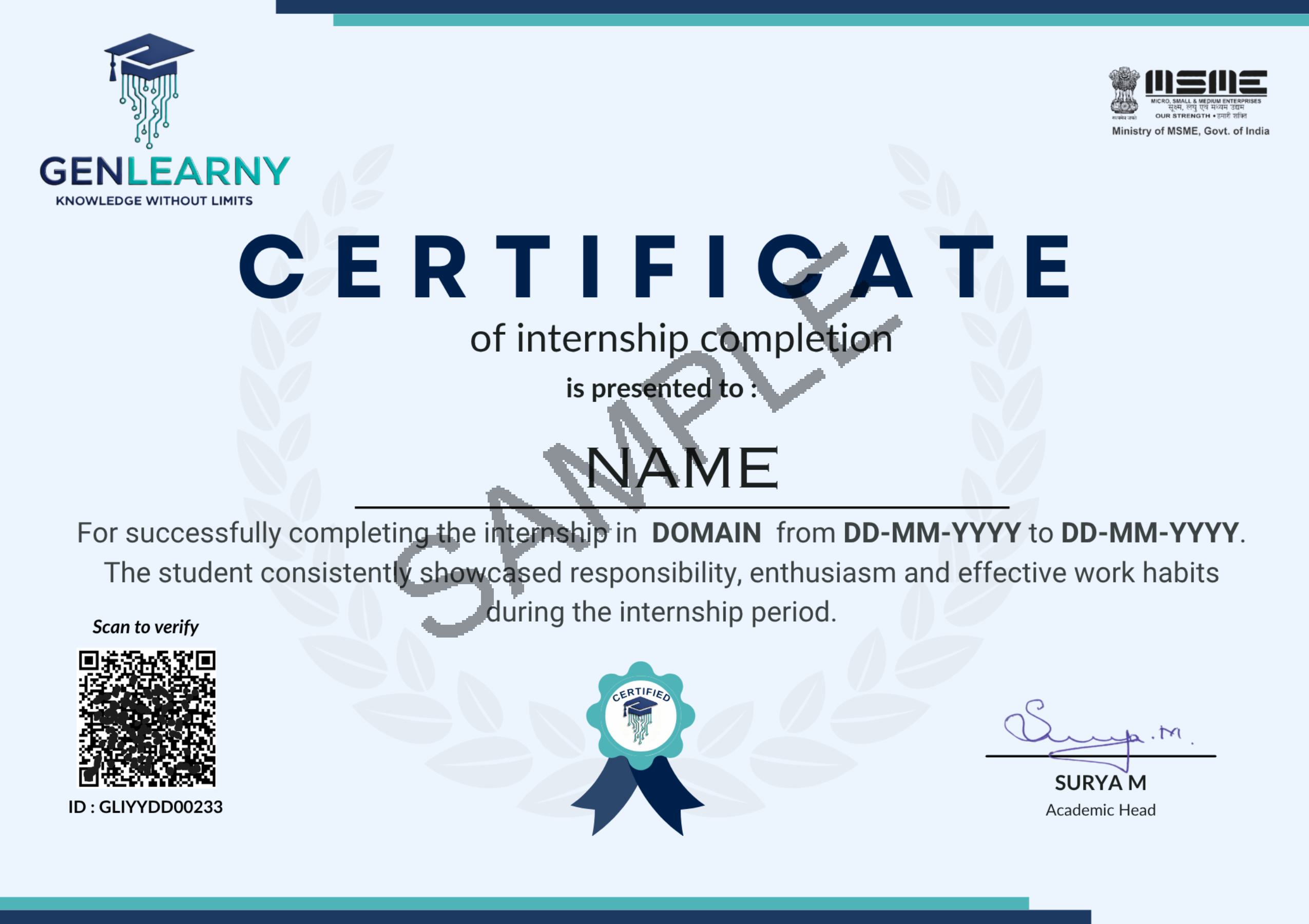
Internship Completion Certificate
Issued by GenLearny
Companies Hiring Data Analysts.








Program Curriculum
Role and purpose of an operating system
Types of operating systems: Batch, Time-sharing, Distributed, Embedded
System components: kernel, shell, and system calls
OS architecture and user interfaces
Practical: Explore OS environments (Windows, Linux, macOS)
Process lifecycle and process control block (PCB)
Context switching and scheduling concepts
CPU scheduling algorithms: FCFS, SJF, Priority, Round Robin
Interprocess communication (IPC) and synchronization
Practical: Implement scheduling algorithms using C or Python
Difference between processes and threads
Multithreading models and advantages
Thread synchronization using semaphores and mutex
Deadlocks: prevention, avoidance, detection, and recovery
Practical: Create multithreaded programs using POSIX threads
Memory allocation and fragmentation
Paging and segmentation concepts
Virtual memory, demand paging, and page replacement algorithms
Thrashing and performance optimization
Practical: Simulate memory allocation and page replacement algorithms
File organization, allocation, and access methods
Directory structures and file system hierarchy
Disk scheduling algorithms: FCFS, SSTF, SCAN, C-SCAN
File permissions, protection, and backups
Practical: Explore file system operations in Linux
I/O hardware and device controllers
Interrupt handling and polling
Device drivers and kernel I/O subsystems
Buffering, caching, and spooling
Practical: Simulate I/O scheduling and buffering mechanisms
User authentication and access control
Security threats: viruses, worms, and malware
Encryption and data protection techniques
System recovery and fault tolerance
Practical: Configure Linux user permissions and access control
Distributed OS architecture and communication models
Resource sharing and synchronization in distributed systems
Virtual machines and hypervisors
Cloud-based OS concepts and containers (Docker overview)
Practical: Setup and run a basic virtual machine environment
Linux internals and command-line operations
Windows architecture and system management tools
Android OS and embedded systems overview
Real-world OS comparisons and performance analysis
Practical: Hands-on with Linux shell commands and scripting
- Develop an OS-level simulation (e.g., CPU scheduler, memory manager)
- Analyze performance of algorithms across OS types
- Prepare documentation and presentation
Practical: Build a mini-project demonstrating OS principles
Affordable and Student-Friendly Pricing

Gen-Edge
₹5,000
- Recorded Lectures
- Real Time Projects
- Live Sessions
- One On One Doubt Clearing Sessions
- Certifications
- Mentor Support
- Placement Guidance
- Interview Assistance
- LinkedIn Optimization

Gen-Pro
₹9,000
- Recorded Lectures
- Real Time Projects
- Live Sessions
- One On One Doubt Clearing Sessions
- Certifications
- Mentor Support
- Placement Guidance
- Interview Assistance
- LinkedIn Optimization
# FAQs
Answers to Your Most Common Questions


We provide internship programs across CSE/IT, Management, ECE/EEE, Mechanical Engineering, and Digital Marketing, focusing on real-world projects and skill development.
Yes! Our internship programs are designed to accommodate beginners while also challenging advanced learners with hands-on tasks.
Yes, all our internship programs are designed in collaboration with industry requirements to provide practical, real-world experience.
Students, fresh graduates, and anyone looking to gain hands-on industry experience can apply, regardless of their prior knowledge.
You gain practical experience, work on real-time projects, build a strong portfolio, and improve employability in your chosen field.
Yes. Every participant is guided by industry professionals to ensure a meaningful learning experience.